Shared Hosting
  WordPress Hosting
  Cloud VPS Hosting
  Dedicated Servers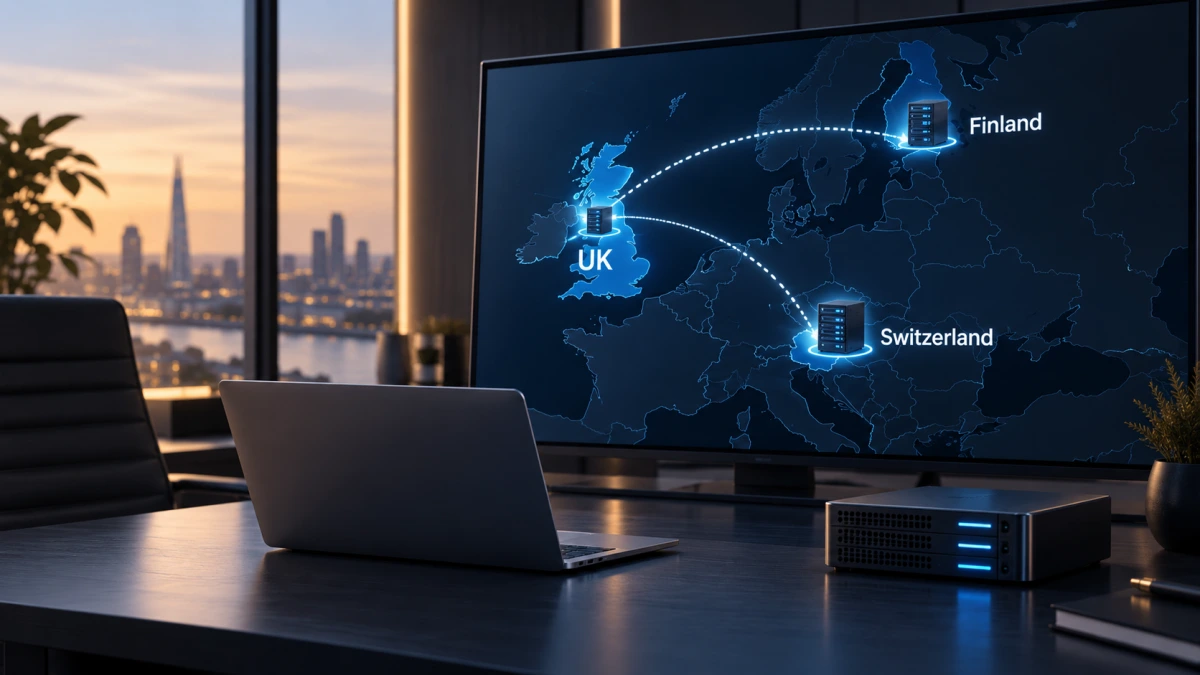
The Case for Hosting Outside the UK
Two years ago, few UK site owners gave any thought to where their server sat. That has changed. The Online Safety Act is now being enforced, the Home Office has used secret notices under the Investigatory Powers Act against one of the largest technology companies in the world, and a growing number of people running websites from the UK are asking whether hosting outside the UK would put them beyond the reach of either.
The honest answer is split down the middle. Hosting abroad genuinely changes how data can be obtained from your host. It does very little about the Online Safety Act, and any provider telling you otherwise is selling you something. This article sets out both halves, because the half that does not help you is the one most likely to cause trouble if you misunderstand it.
The short version: moving hosting abroad changes the legal route UK authorities may need to use to obtain data from your host, and can put another country's legal process between the request and the server. It does not take you out of scope of the Online Safety Act, it does not prevent UK blocking or disruption measures, and it does nothing about UK law applying to you personally.
Why the question is being asked now
The Online Safety Act is live and enforced
Ofcom began enforcing the Act's age-assurance duties in 2025 and has already taken enforcement action, including substantial fines, against providers based outside the UK. AVS Group was fined £1 million plus a further £50,000 for failing to respond to information requests, and 8579 LLC £1.35 million plus £50,000 on the same pattern.
The Home Office has used technical capability notices
In early 2025 a notice under section 253 of the Investigatory Powers Act led Apple to withdraw Advanced Data Protection, its end-to-end encryption for iCloud backups, from new UK users. That first notice was later withdrawn, a new one focused on UK users was reportedly issued, and Apple filed a fresh challenge at the Investigatory Powers Tribunal in August 2026. The underlying lawfulness question has still not been decided.
The Investigatory Powers Act was widened in 2024
The 2024 amendments strengthened and clarified the extraterritorial aspects of the Act, including in relation to data retention notices and the definition of a telecommunications operator, and added a regime under which selected operators can be required to notify the Secretary of State before making specified technical changes. The direction of travel is towards more reach, not less.
None of this means UK law is uniquely hostile. It means the UK has been unusually active, and site owners are right to ask what that means for them.
What hosting outside the UK changes
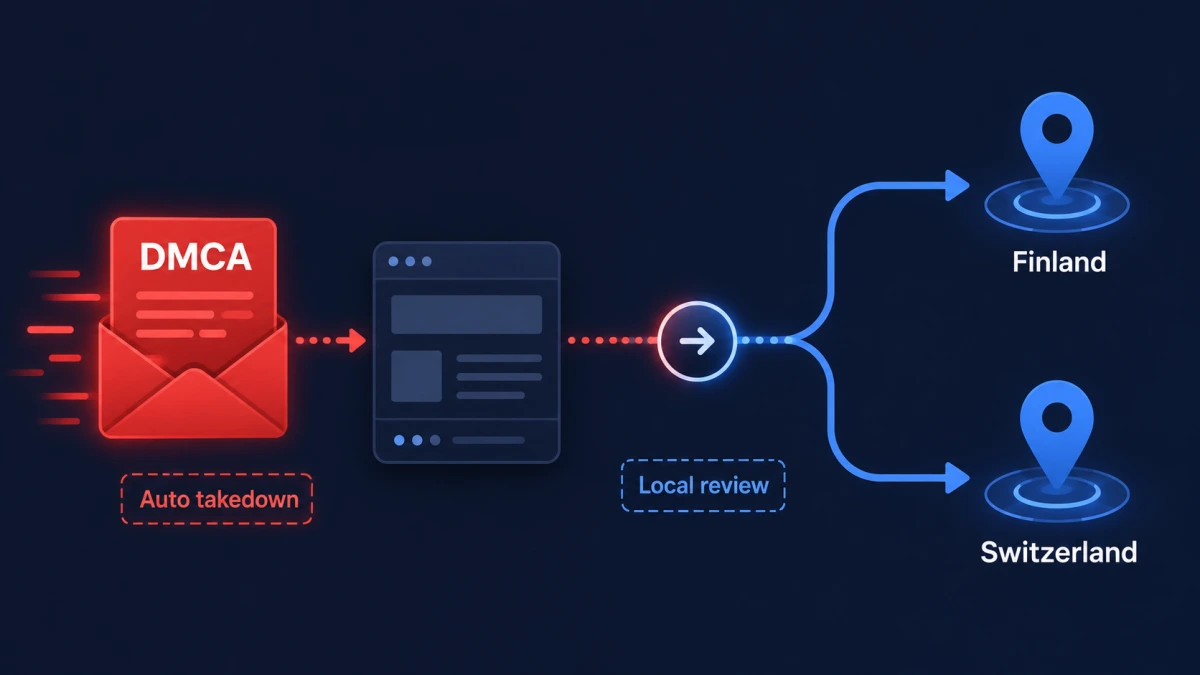
The route to your data gets longer. When your site and its databases sit with a UK hosting company, UK authorities can serve that company directly under UK law, and the company must comply. Once the data sits with a provider in Finland or Switzerland, the available routes change: mutual legal assistance to the country where the data is held, or, where a designated international cooperation arrangement exists, an overseas production order served directly on the provider. Both involve more process, more time and more scope for the request to be tested than an order served on a UK company.
The provider's obligations come from somewhere else. Retention duties, disclosure duties and the legal tests an order must meet are set by the provider's own jurisdiction. For our two locations those are set out in detail in our guides to Finnish hosting law and Swiss data protection law.
UK notices become more complicated to enforce in practice. The Investigatory Powers Act expressly claims extraterritorial reach in some circumstances, so a foreign provider is not legally immune, and Apple, an American company, is the proof. But the enforcement position can differ materially where a provider has no UK company, staff or infrastructure. The important distinction is practical enforceability, not a blanket exemption from UK law.
You choose the rules your provider lives under. Rather than inheriting whatever regime applies to the nearest data centre, you pick a jurisdiction on purpose. How to judge one is covered in what offshore hosting means.
What it does not change
This is the part that matters most, and the part most offshore hosting pages leave out.
The Online Safety Act follows your users, not your server
The Act applies to regulated services with links to the UK, which can include a significant number of UK users, the UK being a target market, or in some cases a material risk of significant harm to UK users. Where your server sits is not part of that test. Ofcom's enforcement to date has included providers based well outside the UK, so moving a site to Finland or Switzerland changes nothing about its duties.
Ofcom has tools that do not need your server
Ofcom has openly acknowledged that collecting fines from foreign operators is hard, and most have not been paid. That is not the same as having no leverage. It can also seek court orders requiring internet providers, payment services or advertising providers to disrupt access to a seriously non-compliant service. It has considered using those powers in enforcement cases, although the statutory threshold is high. Several investigations have closed because the operator chose to block UK users rather than comply.
UK law still applies to you
If you live in the UK, UK courts and UK police have jurisdiction over you, your devices and your accounts, wherever your website is hosted. Moving the server protects the server. It does not relocate the person running it.
Your own compliance duties stay put
If you are a UK business, UK GDPR applies to you as the controller of your customers' data regardless of where it is stored. Hosting abroad does not remove those obligations. It only changes who holds the data on your behalf.
Is your site even in scope of the Online Safety Act?
Many UK site owners worrying about the Act do not need to. Broadly, it covers three kinds of service: user-to-user services, where users can share content with each other; search services; and services publishing pornographic content. A business website, a portfolio, a blog or a shop where the only user interaction is comments or reviews on your own content can fall within the limited functionality exemption in Schedule 1.
Forums, communities, file sharing, chat, marketplaces with user listings and anything where users publish to each other are a different matter, and additional user-to-user functionality can bring an otherwise exempt service back into scope. If that describes your site, take advice on your duties, because hosting location will not be the deciding factor. This is general information rather than legal advice for your situation.
The compliance point UK businesses miss
A common worry is that hosting customer data abroad creates a data protection headache. For our two locations it does not. The ICO lists every EEA country, Finland included, as adequate for UK transfers, and Switzerland holds UK adequacy as well. A restricted transfer to either does not require an International Data Transfer Agreement or other appropriate safeguards on the basis of location alone. You still need the usual processor terms with your host, exactly as you would with a UK provider.
Do not forget the domain
Moving your hosting abroad and keeping a .uk or .co.uk domain leaves one part of your setup firmly in the UK. Those extensions are run by Nominet, a UK registry, and a domain can be acted on at the registry regardless of where the website behind it is hosted. If jurisdiction is the reason you are moving, it is worth reading who can take your domain away before deciding whether your domain should move too. For many UK businesses a .uk domain is the right choice for customers, and that is fine, as long as the trade-off is a decision rather than an oversight.
Finland or Switzerland, for a UK buyer
FINLAND BETTER VALUE
An EU member with GDPR broadly equivalent to the UK's own regime, strong constitutional protection for confidential communications, and lower prices across our range. The caveat is that being inside the EU means orders from other EU states now travel faster under the EU e-Evidence Regulation, a regime that does not cover UK requests.
SWITZERLAND OUTSIDE THE EU AND THE UK
Outside both the EU and the UK, with its own Federal Act on Data Protection and its own procedures for handling foreign requests. The position most UK buyers intuitively want, at a higher price than Finland on shared hosting and VPS. WordPress hosting is priced the same in both.
The full comparison is in Finland versus Switzerland. For most UK sites the practical difference in speed is small: both locations are a short hop from London, and you can test the route from your own connection on our looking glass.
For UK customers at Packetra
Signup takes an email address, with no identity check, no document upload and no phone verification. Prices can be shown and paid in pounds, and we accept Bitcoin and Monero through our own BTCPay Server alongside conventional methods. We have no UK entity, no UK staff and no UK infrastructure, which is the point.
If you are moving an existing UK-hosted site, our migration guide covers doing it without downtime. And if you are unsure which plan fits, shared and WordPress hosting both carry a 30 day money-back guarantee.
Frequently asked questions
Is it legal for a UK website to be hosted abroad?
Yes. There is no requirement for a UK website or a UK business to host in the UK. Plenty of large UK organisations host abroad for cost or technical reasons.
Does hosting outside the UK get around the Online Safety Act?
No. The Act applies to in-scope services with UK links, regardless of where the server is, and Ofcom has already acted against providers based outside the UK.
Can UK authorities get my data from a foreign host?
Yes, through more than one route. Mutual legal assistance goes to the country where the data is held and is executed under that country's law. Where a designated international cooperation arrangement exists, an overseas production order can be served directly on the provider. Both are slower and more constrained than an order served on a UK company, but neither is theoretical.
Can the Investigatory Powers Act reach a foreign hosting company?
In some circumstances the Act expressly claims extraterritorial reach, so there is no blanket exemption. What differs is practical enforceability against a provider with no UK company, staff or infrastructure.
Do I need extra paperwork to host UK customer data in Finland or Switzerland?
No transfer mechanism is needed on the basis of location, because both hold UK adequacy. You still need normal processor terms with your host, as you would with any provider.
Should I move my .uk domain too?
Only if jurisdiction is your main concern. A .uk domain stays under a UK registry wherever your hosting is. For many businesses that is an acceptable trade for the trust a .uk address gives UK customers.