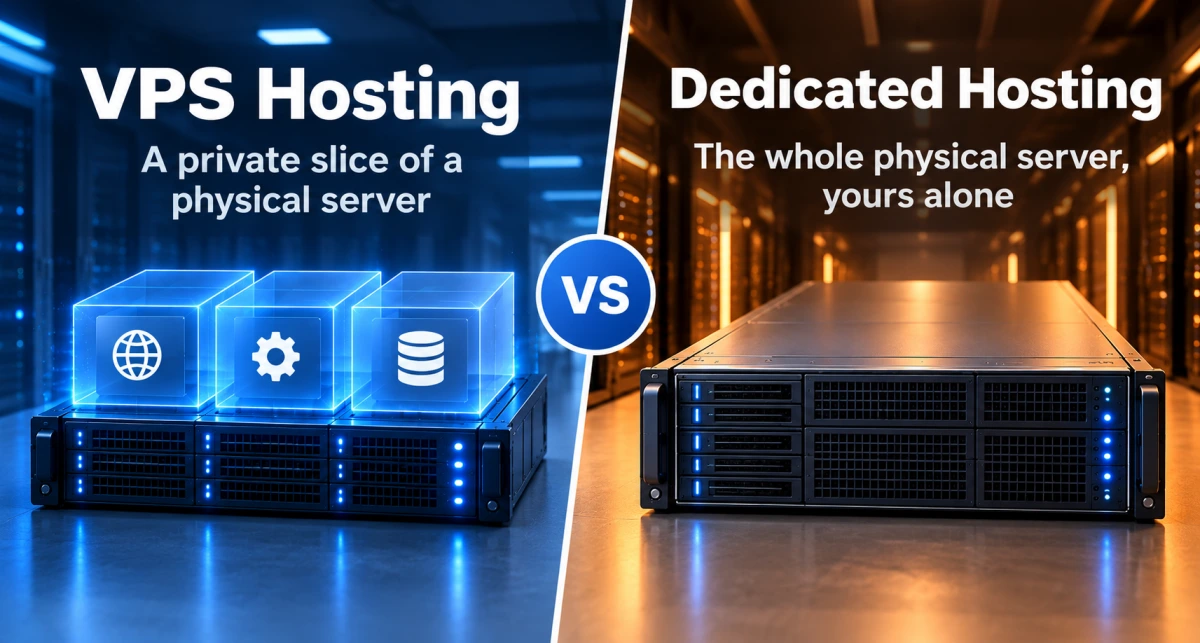
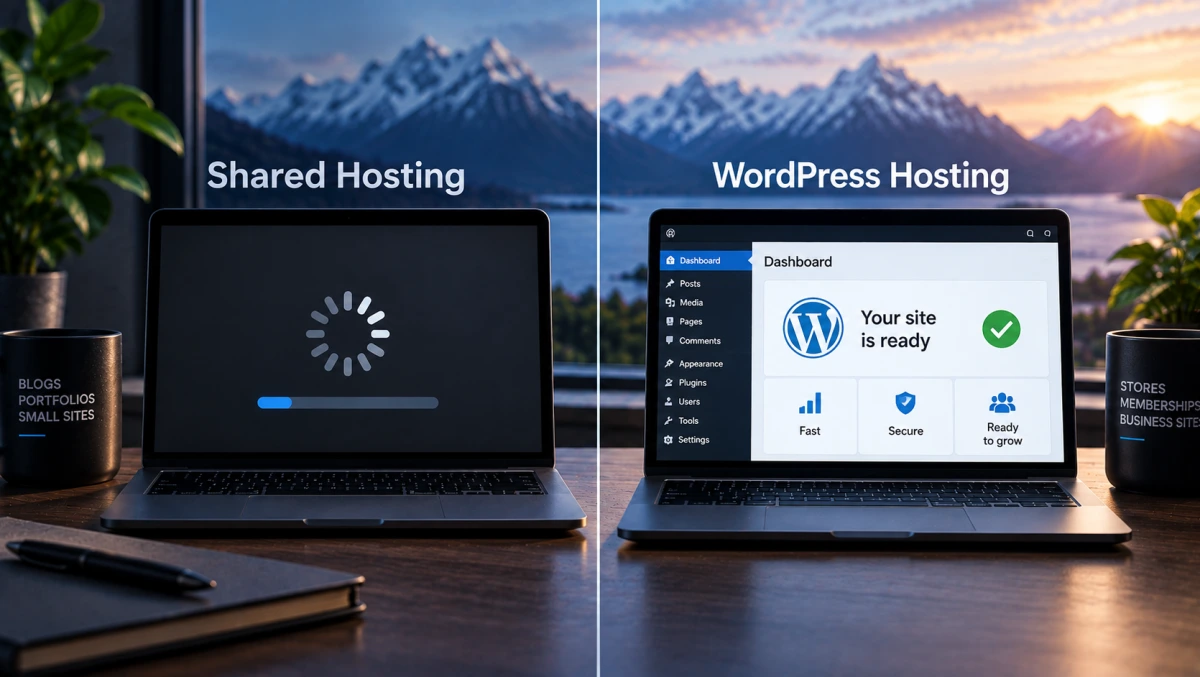
Shared Hosting
  WordPress Hosting
  Cloud VPS Hosting
  Dedicated Servers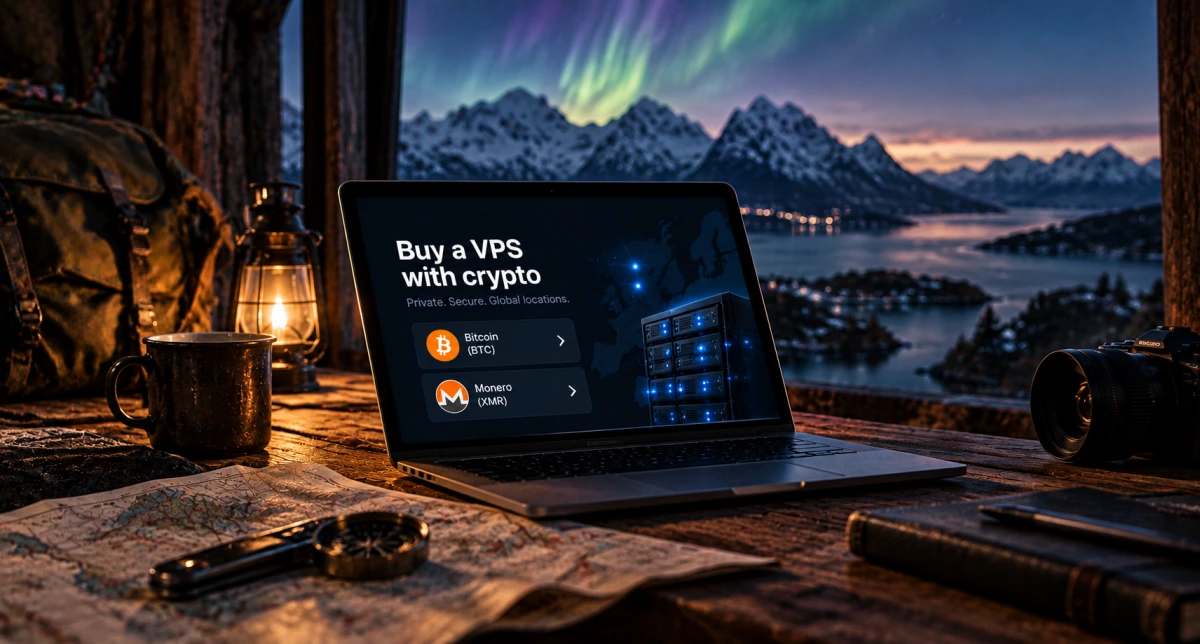
You can buy a VPS with crypto in about ten minutes: pick a host that accepts your coin, sign up, choose a plan, and pay the invoice from your wallet. The details decide whether the purchase stays private and goes smoothly, though. Which coin you use, where it came from and who processes the payment matter more than most guides admit.
This guide walks through how to buy a VPS with crypto step by step, compares Bitcoin and Monero for the job, and covers the mistakes that cause stuck payments and accidental identity leaks.
What you need before you buy a VPS with crypto
- A wallet you control. A non-custodial wallet, where you hold the keys, rather than a balance on an exchange.
- Enough coins to cover the invoice plus the network fee. The fee comes on top of the invoice amount, so leave room for it.
- An email address for the account. If privacy matters, use one that is not tied to your name.
- An SSH key, ideally. Logging in with a key is safer than a password, and you can add it as soon as the server is ready.
Bitcoin or Monero: which should you pay with?
Both work, but they are not equally private. Bitcoin is pseudonymous: every transaction sits on a public ledger forever, and if the coins came from an exchange that knows your identity, the trail can lead back to you. Monero hides the sender, receiver and amount by default, so the payment itself reveals nothing on-chain.
| Bitcoin | Monero | |
|---|---|---|
| Transaction privacy | Public ledger, traceable | Private by default |
| Accepted by hosts | Very widely | Less widely |
| Network fees | Vary with network demand | Usually low |
| Easy to buy | Almost every exchange | Delisted by several large exchanges |
| Best for | Convenience | Privacy |
If privacy is the reason you want to buy a VPS with crypto, Monero is the better fit. If you only want to avoid cards and banks, Bitcoin is fine. We go deeper on the Monero side in our guide to anonymous hosting with Monero.
How to buy a VPS with crypto, step by step
Step 1Choose a host that accepts your coin
Before you buy a VPS with crypto, check which coins the host takes and how it processes them. A host running its own payment server, such as BTCPay Server, receives the coins directly. A host using a third-party processor passes your payment through another company, which sees the transaction and may collect details of its own. Also check whether the host ever asks for ID, at signup or later. Our list of no-KYC hosting companies is a good starting point.
Step 2Pick a plan and a location
Size the server for what you will run on it, and choose the country with the legal environment you want. If you are unsure how much you need, read how to choose a VPS without overpaying. For the jurisdiction question, our Finland vs Switzerland comparison covers the two locations we use.
Step 3Create your account
Sign up with the email address you set aside. A privacy-respecting host should not need more than an email and a password to open an account. If the form asks for a phone number, a home address or an ID upload, that host is not the private option it may claim to be.
Step 4Check out and choose crypto
Pick your billing cycle and select your coin as the payment method. The host generates an invoice with a payment address, the exact amount due and usually a countdown. Crypto invoices are only valid for a limited time, because the exchange rate is locked for that window.
Step 5Pay the invoice from your own wallet
Scan the QR code or copy the address and amount into your wallet. Send the exact amount shown, before the timer runs out, on the correct network. Paying from your own wallet means the exchange does not make the payment to the host for you. With Bitcoin, that is not the same as untraceable: the exchange still knows the address it sent your coins to, and the onward payment is visible on the public ledger. Monero hides that onward payment.
Step 6Wait for confirmation
The invoice updates once the network confirms the payment. How long that takes depends on the coin and on network traffic. Once it is confirmed, the host sets up your server and emails your login details.
Step 7Log in and lock it down
Connect over SSH, add your SSH key, update the system and set up a firewall. If privacy is the goal, connect through a VPN or Tor every time you manage the server, so your home IP address stays out of the host's login records.
Common mistakes when paying for a VPS with crypto
Most problems people hit when they buy a VPS with crypto come down to a handful of avoidable slips.
- Underpaying. Many exchanges deduct their withdrawal fee from the amount you send, so the invoice receives less than it asked for. The payment then shows as partial and the order stalls until you top it up.
- Paying an expired invoice. If the timer runs out, generate a fresh invoice rather than paying the old address. A late payment usually has to be matched by hand.
- Using the wrong network. Some coins and tokens exist on several networks. Sending on a different network from the one the invoice names can mean the funds never arrive.
- Paying straight from an exchange. It works, but the exchange records the destination against your verified identity, which undoes much of the privacy you were after.
- Forgetting renewals. Crypto payments do not renew themselves the way a saved card does. Watch for the renewal invoice by email, or choose a longer billing cycle so you pay less often.
Self-hosted payments vs third-party processors
This is the detail most hosts skip. When a host runs its own payment server, your coins go straight from your wallet to the host, and no other company is involved. When a host uses a third-party crypto processor, that processor sits in the middle: it generates the invoice, sees the transaction and can collect data of its own, such as your email address or IP address. Some processors also have to verify identities under their own compliance rules.
Neither setup is wrong, but they are not equal for privacy. Ask a host which one it uses before you buy a VPS with crypto for privacy reasons. Our guide to self-hosted crypto payments with BTCPay explains how the self-hosted approach works.
Buying a crypto VPS at Packetra
At Packetra, Bitcoin and Monero payments go through our own self-hosted BTCPay Server, so no third-party processor sits between your wallet and us. Other cryptocurrencies are processed through CoinPayments, and PayPal and Wise are also available if you prefer them. Signup takes an email address and a password, and we never ask for ID at any stage.
Our Finland VPS plans start at EUR 9.90 a month, with Swiss VPS plans alongside, all with full root access. One thing to know before you order: our 30 day money back guarantee covers shared and WordPress hosting, not VPS plans, so choose your plan size with care. If you are still deciding what to run, see our list of things to do with a VPS.
FAQ
Is it legal to buy a VPS with crypto?
In most countries, yes, so you can buy a VPS with crypto much as you would pay by card. Rules differ between jurisdictions, though, and a few countries restrict or ban paying with cryptocurrency, so check yours. What you run on the server still has to follow the law, and the host's acceptable use policy.
Can I buy a VPS with crypto anonymously?
You can come close. Use a host with email-only signup, pay in Monero from your own wallet, use an email address that is not tied to your name, and manage the server through a VPN or Tor. Paying in crypto alone is not enough if the other links still point to you. Our guide to what an anonymous VPS hides covers the rest.
What happens if I send the wrong amount?
If you send too little, the invoice usually shows as partly paid and the order waits until you send the rest. If you send too much, contact the host's support team. Either way, keep your transaction ID so the payment can be matched.
Which cryptocurrency is most private for buying a VPS?
Monero. It hides the sender, receiver and amount by default, while Bitcoin records every transaction on a public ledger. If you pay in Bitcoin, coins that never passed through an exchange linked to your identity leave a much weaker trail.