Shared Hosting
  WordPress Hosting
  Cloud VPS Hosting
  Dedicated Servers
Most pages selling dedicated servers in Finland lead with hydroelectric power, cool air and press freedom rankings. All three are true. None of them tells you what happens when a prosecutor in another member state wants what is on your disk.
This guide covers both halves properly. What dedicated hardware genuinely changes about your exposure, what the six Finnish machines are and cost, and what Finnish and EU law actually do, including the parts that count against choosing Finland. If you want the same treatment for the other jurisdiction we operate in, see dedicated servers in Switzerland.
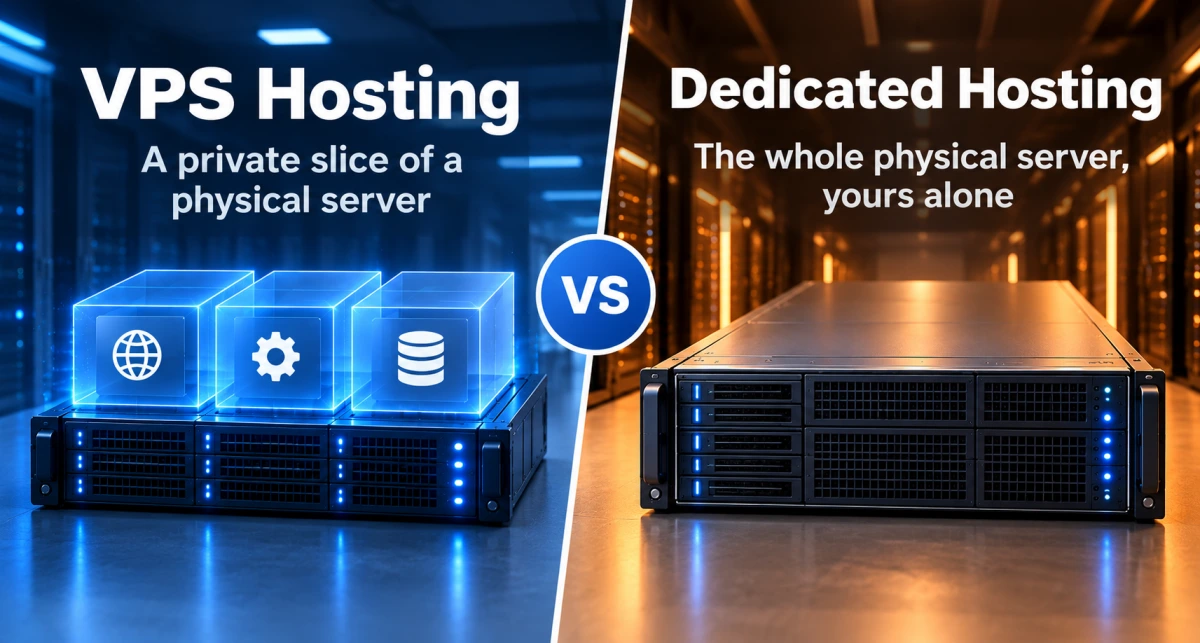
What a dedicated server changes that a VPS does not
The short technical version: on a VPS your operating system runs inside a hypervisor the provider controls. Full disk encryption still protects the disk at rest, but the key sits in RAM while the machine runs, and the hypervisor layer can reach that memory. Dedicated hardware removes that layer. The datacentre still has physical access, and on machines with a management controller, out-of-band access, so this raises the floor rather than putting you out of reach.
There is a second difference that matters more in Finland than it does elsewhere, and it is administrative. Under GDPR you are usually the controller and we are the processor, and the processing we do for you is bounded by what runs on the hardware. On a shared virtualisation node that boundary cuts through a machine holding other people's data. On a dedicated server it is the machine. If you ever have to describe your processing arrangements to a regulator, an auditor or a customer, that is a much shorter and much cleaner description.
You also stop sharing IP reputation, stop competing for I/O with strangers, and stop being subject to fair-use terms that aggregate across other people's usage. Those are ordinary operational wins rather than privacy ones, but they are usually what makes the invoice worth it.
Our dedicated servers in Finland: the full lineup
Six machines in two families. The families are not tiers of the same thing, they are different shapes of computer, and choosing between them badly is the most expensive mistake available on this page. The rule: if your workload cares how fast one core is, buy single-socket. If it cares how many cores exist, buy dual-socket.
Single-socket: modern cores, DDR5, unmetered bandwidth
Fewer cores, much faster ones. DDR5 memory, NVMe throughout, software RAID-1 by default, same-day delivery. This is the family for web applications, game servers, VPN endpoints, transactional databases and anything that lives or dies on single-thread performance.
| Plan | CPU | Cores | RAM | Storage | Network | Price |
|---|---|---|---|---|---|---|
| AD1 | Ryzen 7 PRO 8700GE | 8C / 16T | 64GB DDR5 | 2 x 512GB NVMe | 1 Gbit/s unmetered | EUR 163.90/mo |
| AD2 | Ryzen 7 PRO 8700GE | 8C / 16T | 128GB DDR5 | 2 x 1.92TB NVMe | 1 Gbit/s unmetered | EUR 303.90/mo |
| AD3 | Ryzen 9 7950X3D | 16C / 32T | 128GB DDR5 | 2 x 1.92TB NVMe | 1 Gbit/s unmetered | EUR 362.90/mo |
Read AD1 and AD2 carefully before you assume the second is the upgrade. Same processor, same eight cores, same sixteen threads. The difference is 64GB against 128GB of memory and roughly 1TB against 3.8TB of NVMe. If your application is CPU-bound, AD2 will benchmark identically to AD1 and you will have spent EUR 140 a month on headroom you are not using. AD3 is the plan that actually adds compute, and the 7950X3D's large cache makes it the strongest of the three for databases, compilation and simulation work.
Dual-socket: high core count, 10G networking, IPMI
Enterprise hardware for parallel work: virtualisation, build farms, video encoding, dense container hosting, heavy database concurrency. Five dedicated IPv4 addresses on each, 10G networking with a 100TB allowance, and IPMI KVM on the upper two for out-of-band console access. Delivery is 24 to 48 hours rather than same day.
| Plan | CPU | Cores | RAM | Storage | Network | Price |
|---|---|---|---|---|---|---|
| IN1 | 2 x Intel Xeon E5 | 28C / 56T | 64GB DDR4 | 1TB SSD | 1G unmetered or 10G 100TB | EUR 182.90/mo |
| IN2 | 2 x Intel Xeon Gold | 40C / 80T | 64GB DDR4 | 1TB NVMe | 10G, 100TB | EUR 248.90/mo |
| EPYC | 2 x AMD EPYC 7 Series | 64C / 128T | 64GB DDR4 | 1TB NVMe | 10G, 100TB | EUR 421.50/mo |
The EPYC box gives you 128 threads against 64GB of RAM, which is half a gigabyte per thread. That ratio is generous for encoding and build farms and genuinely tight for memory-hungry databases or dense virtualisation. If memory is your bottleneck rather than parallelism, AD3 gives you twice the RAM in faster DDR5 for EUR 58.60 a month less. Buy the shape of the workload, not the biggest number in the table.
The AD plans carry a one-time setup fee: EUR 59.50 on AD1, EUR 109.90 on AD2 and EUR 149.90 on AD3. That is passed through from our upstream rather than baked into the monthly rate, and it is waived entirely on terms of six months or longer. Worth knowing before you compare monthly headline prices against anyone else's. Every plan in both families includes full root access, dedicated IPv4, a /64 IPv6 allocation, DDoS protection and a choice of operating systems.
What EU membership actually gives you
GDPR gets treated as a marketing badge by a lot of hosting companies, which is a shame, because the mechanism underneath it is the useful part. Your data sits under a regime with defined roles, a written processor relationship, breach notification deadlines, and a named supervisory authority you can complain to without hiring anyone. In Finland that authority is the Data Protection Ombudsman. Underneath it, Section 10 of the Finnish Constitution protects private life and the secrecy of confidential communications, and any encroachment has to be authorised by law.
Finland also sits consistently among the highest-ranked countries in the world for press freedom. That is not a legal guarantee, but it is a fair proxy for how a state treats publishers who annoy it, and if your work involves publishing things somebody would prefer unpublished, that track record is worth more than a datacentre certificate.
One thing EU membership does not do is decide whether GDPR applies to you. That is settled by where you are established and whom you offer services to or monitor, not by where your server is racked. Moving a machine into the Union does not pull you into GDPR, and moving it out does not pull you clear. We go through that misconception in offshore hosting explained.
e-Evidence: Finland is on the inside of it
This is the strongest argument against choosing Finland, so we would rather state it ourselves than have you find it later.
From 18 August 2026 the EU e-Evidence Regulation gives judicial authorities across the member states a direct route to electronic evidence held by service providers in other member states, with a ten-day production deadline and eight hours in emergencies. Finland is inside that system as both an issuing and an executing state. A European Production Order from a prosecutor elsewhere in the Union reaches Finnish-held data through a harmonised procedure rather than the slower mutual legal assistance route a non-EU jurisdiction would impose.
If EU authorities specifically are your concern, that is a genuine cost of this jurisdiction and you should weigh it. What it is not is a reason to assume the Swiss alternative is exempt. The Regulation is built around providers offering services in the Union regardless of where they are established, so sitting outside the EU changes which law governs and who reviews the request, not whether the framework can reach a provider. The mechanics are in our guide to the EU e-Evidence Regulation and what it means for hosting customers.
Finland has its own surveillance law, and it is being rewritten
Finland's reputation for privacy predates its current intelligence powers, and the two are often discussed as though the first still describes the second. It does not.
Civilian and military intelligence legislation came into force on 1 June 2019. Among the powers it created is network traffic intelligence, meaning technical collection and processing of data communications that cross the Finnish border. It can be exercised only by the Finnish Security and Intelligence Service, Supo, and by the military intelligence authorities. Not by ordinary police, and not for general crime prevention.
The limits on it are meaningful. Authorisation is decided by the Helsinki District Court, which makes an independent decision and can refuse. The legislation does not permit general, indiscriminate or all-encompassing monitoring: the authority must justify why screening particular traffic over a specified period is essential and show the information cannot be obtained another way, and unrelated material collected along the way is destroyed. An independent Intelligence Ombudsman, with access to everything Supo gathers, is notified of every request, can be heard in those proceedings and can appeal a decision to the Court of Appeal.
The current status is what matters most, and it is unsettled. The Ministry of the Interior has a legislative project underway to reform civilian intelligence legislation for what it calls a changed security and cyber environment. Reforms of this kind usually expand powers rather than contract them, but nothing is adopted and the shape is not public, so anyone telling you today what Finnish intelligence law will look like in two years is guessing. Worth weighing alongside it: Finland joined NATO in April 2023, which changes no domestic surveillance law by itself but belongs in the calculation if alliance posture is part of your threat model.
Copyright, takedowns, and what actually reaches a host
Finland has a reputation for copyright settlement letters, and it is deserved, but the mechanism behind them is routinely misattributed to hosting. Under Section 60a of the Copyright Act a court may order an internet service provider to disclose the contact details of a subscriber whose connection was used to make copyrighted material available. That is the access provider route, aimed at the person behind a home connection in a file-sharing swarm, not the route to a customer running a server. It has also been narrowed considerably: applications now have to show the individual infringed significantly rather than merely being present in a large swarm, and requests have been dismissed for failing to evidence what a particular subscriber actually did.
What applies to hosting is the intermediary regime. Sections 60c and 60e allow a court to order infringing material taken down, and to order blocking where the infringer cannot be identified. The hosting safe harbour turns on specific knowledge: the material, its location and its clearly unlawful nature, arriving through a proper notice or court order rather than vague assertion. Notice-and-action procedure sits in the Act on the Provision of Information Society Services, now operating alongside the harmonised requirements of the EU Digital Services Act. Our article on Finnish hosting law, privacy, retention and e-Evidence covers the retention side in more depth.
The practical takeaway is unglamorous. A valid notice or order gets a response. Speculative correspondence from a law firm does not become an obligation because it is written in capital letters.
Finland or Switzerland: same hardware, same price
We run the same six machines in both countries at the same specifications and the same monthly prices. AD1 is EUR 163.90 in either location. The EPYC box is EUR 421.50 in either location. There is no performance penalty and no discount attached to the choice, so dedicated servers in Finland and their Swiss counterparts differ in exactly one respect: the law that reaches them.
We spell this out because most jurisdiction comparisons quietly assume the privacy-friendly option costs more, and that choosing it is a trade against budget. Here it is not a trade at all.
Choose Finland if your users are in the EU and having your infrastructure there makes your own compliance story simpler, if you want a supervisory authority you can actually escalate to, or if the publishing environment matters to what you are running. Choose Switzerland if you specifically want foreign requests to run through an independent non-EU review rather than the e-Evidence fast track, and you are comfortable with the open question hanging over the Swiss surveillance ordinance revision. Neither is a hiding place, and any provider who sells you one as though it were is not being straight with you.
The two legal environments get a full side-by-side in Finland vs Switzerland hosting in 2026, and fourteen countries are scored against each other in the Hosting Jurisdiction Index.
Ordering without identity documents
Signup takes an email address and a password. We do not ask for identity documents, at signup or afterwards, on any product including dedicated servers, and there is no verification step that appears once the order value passes a threshold. That last detail is where most no-KYC claims quietly break, and a dedicated server is exactly the order size that triggers it elsewhere.
Payment can be made in Bitcoin or Monero through our own BTCPay Server instance, which we run ourselves rather than routing through a third-party processor. A hosted payment gateway sees your transaction data regardless of what your host's privacy policy says, which is the reasoning we set out in why we run our own BTCPay Server. Fiat options are available for anyone who prefers them, and the broader picture is in our guide to anonymous web hosting.
Practical setup on a Finnish dedicated box
Encrypt the disks, and test the unlock path first. LUKS is meaningfully stronger on dedicated hardware than on a VPS because no hypervisor has a routine view of your memory. On IN2 and the EPYC box you have IPMI KVM and can unlock from the console after a reboot. On the AD plans there is no management controller listed, so configure Dropbear in the initramfs and unlock over SSH instead. Either way, reboot deliberately and confirm you can get back in before the machine holds anything you cannot lose.
Set retention before you set anything else. Every legal route described above reaches what exists at the moment it is asked for. On a dedicated server you decide what exists. Shorten log retention to what you genuinely need to operate, and if you are processing personal data, write the retention period down: GDPR expects storage limitation to be a decision rather than an accident.
Treat RAID-1 as uptime, not as backup. The AD plans ship with software RAID-1 across two NVMe drives by default. That survives a drive failure. It does not survive deletion, corruption or ransomware. Keep an off-server copy, encrypted before it leaves the machine.
Have a takedown process before you need one. If you host third-party content, decide now who receives notices, what makes a notice valid, and how fast you act. The safe harbour depends on responding properly to specific notice, and improvising that under a deadline is how people lose it.
Check the AUP before you provision. Tor exit nodes are not permitted in either location. Running a VPN is explicitly allowed and needs no separate approval. Confirm your plans against the policy first rather than after the machine is built.
Frequently asked questions
Is Finland a good jurisdiction for privacy hosting?
For most buyers, yes, with one qualification. Constitutional protection for confidential communications, a strong publishing environment, GDPR with a supervisory authority you can escalate to, and courts that have shown willingness to weigh privacy against enforcement. The qualification is e-Evidence: as an EU member state Finland is inside the fast cross-border access system rather than outside it.
Does Finland have data retention obligations for hosting providers?
Finland's retention rules in electronic communications law are directed at telecommunications operators for defined categories of data, not at hosting providers generally, and EU case law has repeatedly struck down general and indiscriminate retention. In practice a host holds what it generates operationally, which is why your own logging policy matters more than the statute does.
Can a copyright holder get my details from a Finnish host?
Section 60a of the Copyright Act, the provision behind Finland's settlement letter industry, is aimed at access providers disclosing subscriber details for a connection used in significant infringement, and Finnish courts have tightened the evidence required. Against a host, the ordinary route is a takedown or blocking order under Sections 60c and 60e, or notice-and-action, not identity disclosure.
Do dedicated servers in Finland require KYC?
Not with us. Email and password at signup, no identity documents at any point, on any product. Bitcoin and Monero accepted through our self-hosted BTCPay Server.
Which plan should I start with?
AD1 for most single-application workloads, AD3 if you need cores and cache together, IN1 as the cheapest way into high thread counts, and the EPYC box only if you have genuinely parallel work and have checked that 64GB of RAM is enough for it. If you are unsure, describe the workload to us before ordering.
Is a dedicated server worth it over a VPS?
If the reason is performance, your benchmarks decide. If the reason is privacy, the question is narrower: does hypervisor-level exposure matter to your threat model, and does a clean processing boundary matter to your compliance position? If either is a yes, dedicated is the answer. If both are no, a VPS gives you the same jurisdiction for a fraction of the price.
Getting started
All six dedicated servers in Finland come with full root access, dedicated IPv4, a /64 IPv6 allocation, DDoS protection and a choice of operating systems, with the dual-socket machines adding five IPv4 addresses and 10G networking. Specifications, currency options and ordering are on the Finland dedicated server page. If you are weighing cores against clock speed, or Finland against Switzerland, contact us and describe what you are running. That conversation costs nothing and a month on the wrong machine costs EUR 163.90 at minimum.